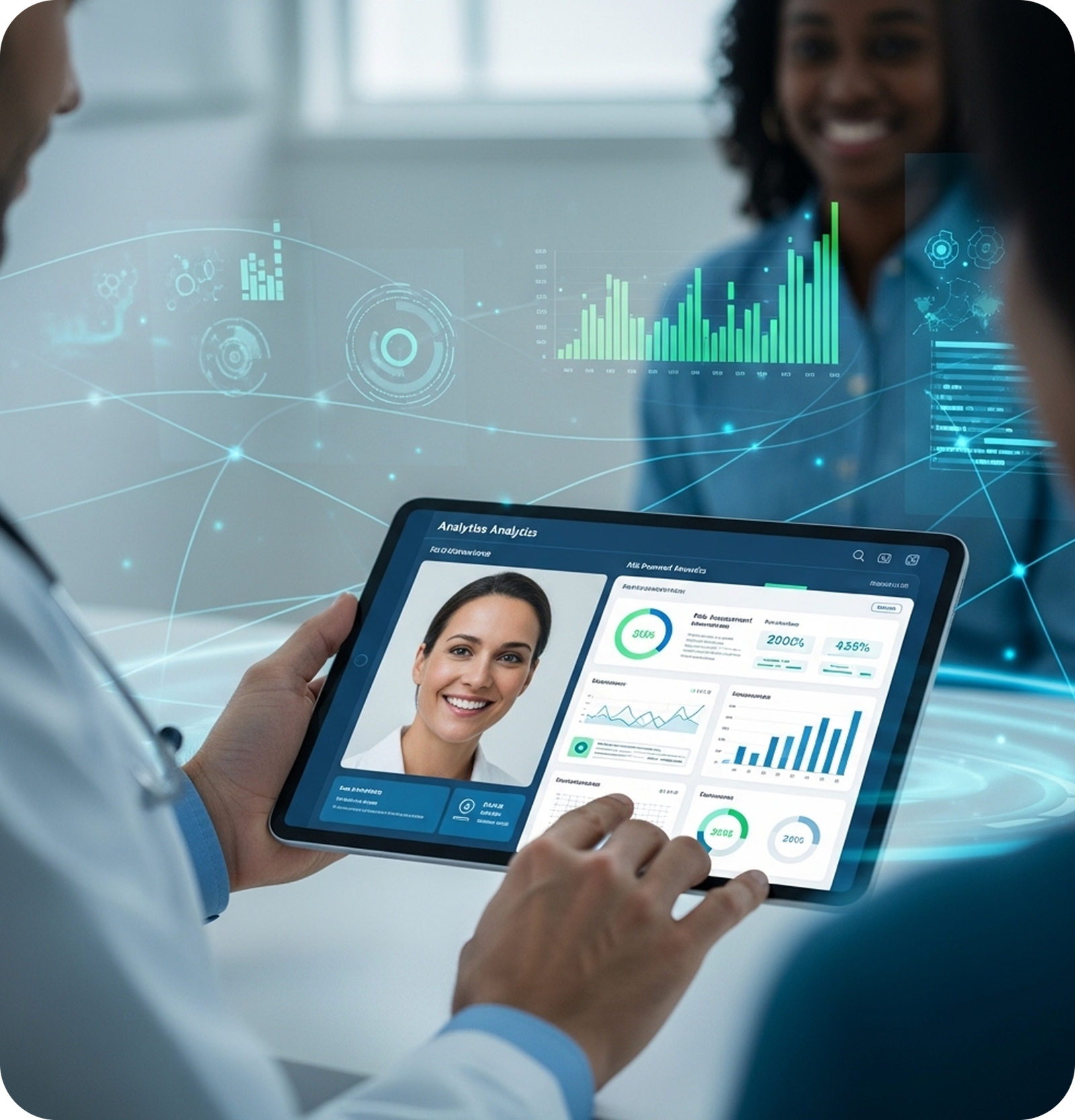

The telehealth component is being developed to function as a secure digital interface between patients and healthcare providers. The system architecture contemplates encrypted virtual consultation capabilities, digital patient workflows, and integration with AI-generated analytical dashboards.
The telehealth layer is intended to support primary care consultations, follow-up appointments, structured care plans, and coordinated referrals. The platform remains under development and has not been commercially deployed.

LATAMED AI's broader model contemplates structured coordination of in-person healthcare services delivered in residential or community-based settings. Rather than directly employing large medical staffs, the Company anticipates pursuing contractual or strategic relationships with licensed healthcare providers and service organizations in jurisdictions where operations are initiated.
The Company's intended role is to provide technology infrastructure, coordination logistics, and data-informed workflow management rather than directly practicing medicine.
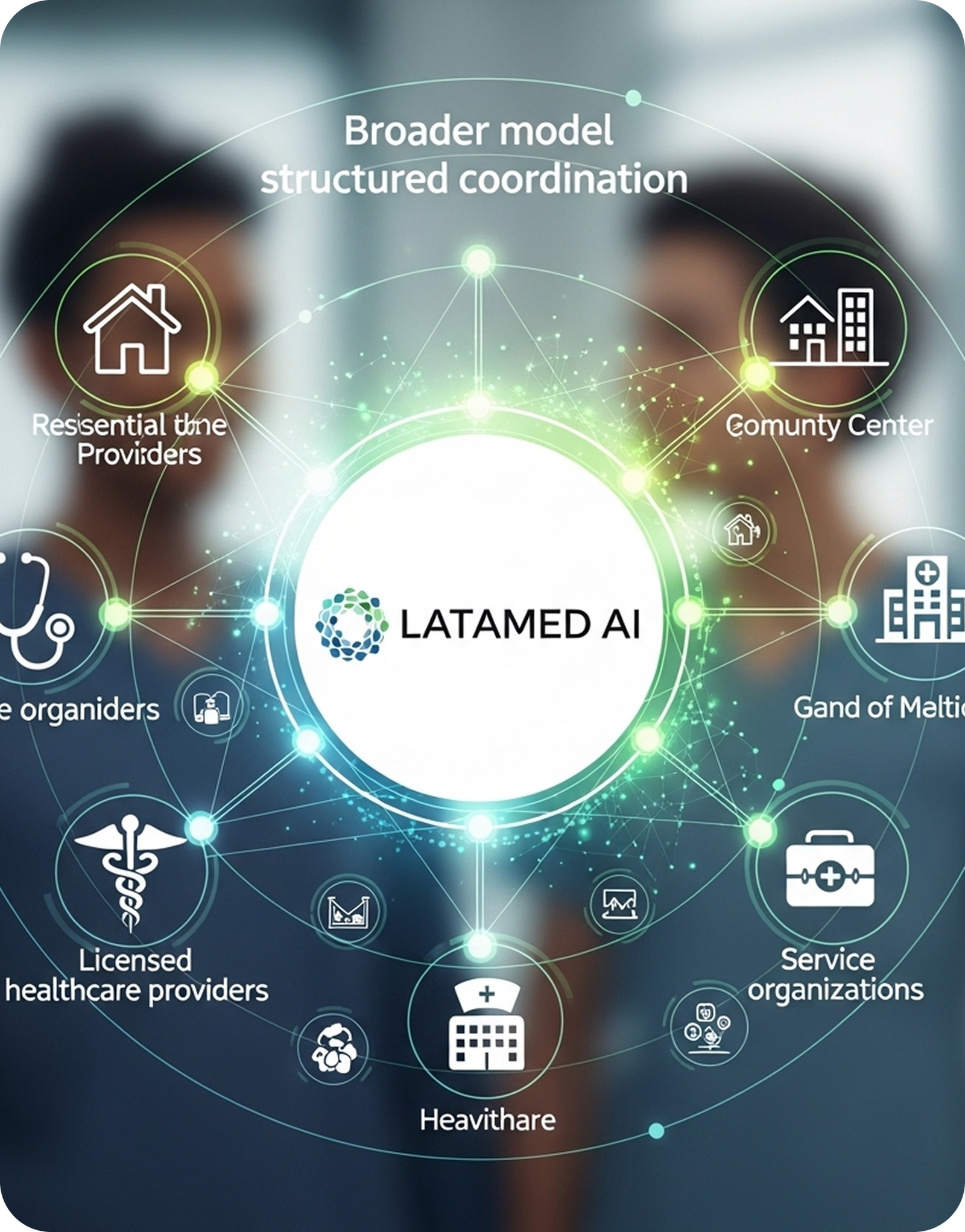
The integration of AI analytics with telehealth and coordination infrastructure is designed to enable data-driven care management and workflow optimization.
The system is designed to function as a support and coordination infrastructure rather than an autonomous clinical system.